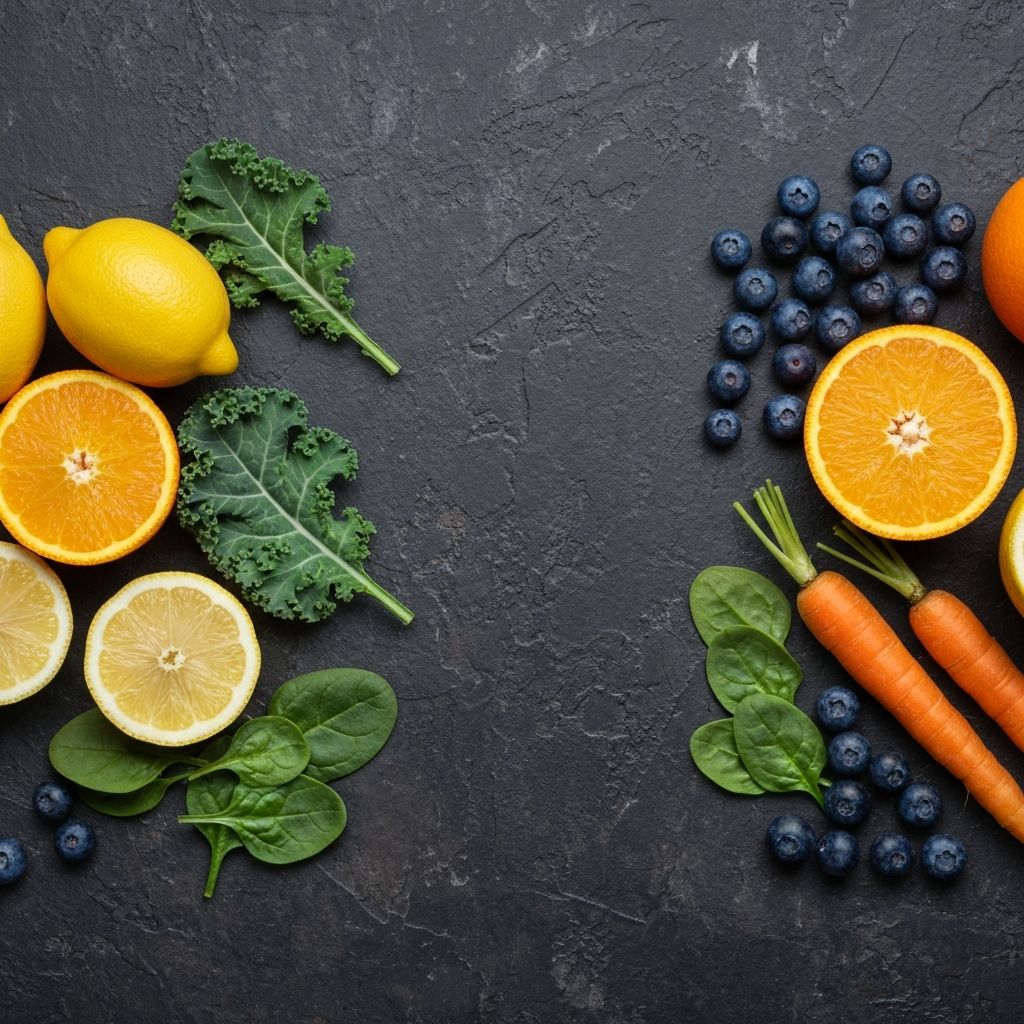
Whilst macronutrients receive considerable attention in popular dietary discourse, micronutrients — vitamins and minerals — are no less fundamental to physiological function. Required in comparatively small quantities, they act as cofactors in enzymatic reactions, support immune defence, facilitate bone and tissue development, and participate in energy metabolism at the cellular level.
The Two Categories of Micronutrients
Micronutrients are broadly divided into vitamins and minerals. Vitamins are organic compounds synthesised by plants and animals; minerals are inorganic elements sourced from the earth and water that plants absorb and animals obtain through consumption. Both categories are essential, meaning the body cannot produce them in sufficient quantity and relies on dietary intake.
Vitamins: Fat-Soluble and Water-Soluble
Vitamins are classified by their solubility, which determines how they are absorbed, stored, and excreted by the body. The four fat-soluble vitamins — A, D, E, and K — are absorbed alongside dietary fats and can be stored in the body's fatty tissue and liver. The nine water-soluble vitamins — C and the eight B vitamins — are not stored in significant quantities and require more regular dietary supply.
Fat-Soluble Vitamins
- Vitamin A: Supports vision (particularly in low-light conditions), skin integrity, and immune function. Found in liver, dairy, eggs, and as beta-carotene in orange and leafy green vegetables.
- Vitamin D: Facilitates calcium absorption and is involved in bone mineralisation and immune regulation. Synthesised through skin exposure to sunlight; also found in oily fish and fortified foods.
- Vitamin E: Acts as a fat-soluble antioxidant, protecting cell membranes from oxidative processes. Found in nuts, seeds, vegetable oils, and leafy greens.
- Vitamin K: Involved in blood coagulation and bone metabolism. Found in dark leafy vegetables (K1) and fermented foods (K2).
Key Water-Soluble Vitamins
- Vitamin C: Supports collagen synthesis, antioxidant defence, and immune function. Found in citrus fruits, berries, kiwi, bell peppers, and broccoli.
- B Vitamins (B1, B2, B3, B5, B6, B7, B9, B12): Collectively involved in energy metabolism, red blood cell production, neurological function, and DNA synthesis. Found across a variety of foods including whole grains, legumes, meat, eggs, and leafy greens.
Minerals: Major and Trace
Minerals are further divided into major minerals (required in larger amounts) and trace minerals (required in smaller quantities). Both categories are essential for well-defined physiological roles.
Bioavailability in Mineral Absorption
The concept of bioavailability is particularly relevant for minerals — it describes the proportion of a nutrient present in food that is actually absorbed and utilised by the body. Factors influencing mineral bioavailability include the food matrix, the presence of enhancers (e.g., vitamin C enhances iron absorption) or inhibitors (e.g., phytates in certain grains can reduce mineral uptake), and individual physiological status.
The Context of Deficiency
Micronutrient deficiency is studied extensively in global nutritional science. Insufficient intake of specific vitamins or minerals can impair the physiological processes they support. Common areas of study include iron, vitamin D (notably in populations with limited sun exposure, such as in the United Kingdom), iodine, zinc, and B12 (particularly in those following exclusively plant-based diets). These studies inform population-level dietary reference values and public health frameworks.
It is important to contextualise this information as educational. The identification and management of nutritional deficiency is a clinical matter and should be addressed with the guidance of a qualified healthcare professional.
This article provides a general educational overview of micronutrient science. It does not constitute dietary advice or recommendations for any individual. Consult a qualified professional for matters relating to personal nutrition.
Micronutrient Reference
| Nutrient | Key Source |
|---|---|
| Vitamin A | Liver, carrots, spinach |
| Vitamin C | Citrus, peppers, kiwi |
| Vitamin D | Oily fish, sunlight, fortified foods |
| Vitamin E | Nuts, seeds, vegetable oils |
| Vitamin K | Kale, broccoli, fermented foods |
| B12 | Meat, dairy, eggs, fortified foods |
| Iron | Red meat, legumes, dark greens |
| Calcium | Dairy, fortified plant milks, tofu |
| Magnesium | Nuts, seeds, whole grains |
| Zinc | Meat, shellfish, pumpkin seeds |
| Iodine | Seafood, dairy, iodised salt |
| Folate (B9) | Leafy greens, legumes, fortified foods |